Fifty years have passed since Kwun Sun-Cheol first engaged in painting. Since then he has held many solo shows in both Seoul and Paris. Despite Kwun having connections with Daegu, he has never held a one-man show in the city. Even though it is much too late, his large-scale art exhibition to be held with the invitation of the Daegu Art Museum is an occasion we have to celebrate.
In 1989 Kwun settled in Paris with his family to devote himself to painting and escape from daily routines. He produced a multitude of paintings and was duly recognized there.
Kwun’s attitude toward his work, conception, and facture is very thoughtful, serious, and unique. He draws countless sketches before embarking on painting. Working in such a way can be described as meditating with a brush much like a philosopher who continues to ruminate on something. In this sense his painting has a philosophy of its own, loaded with his own insight into contemporary Korean history.
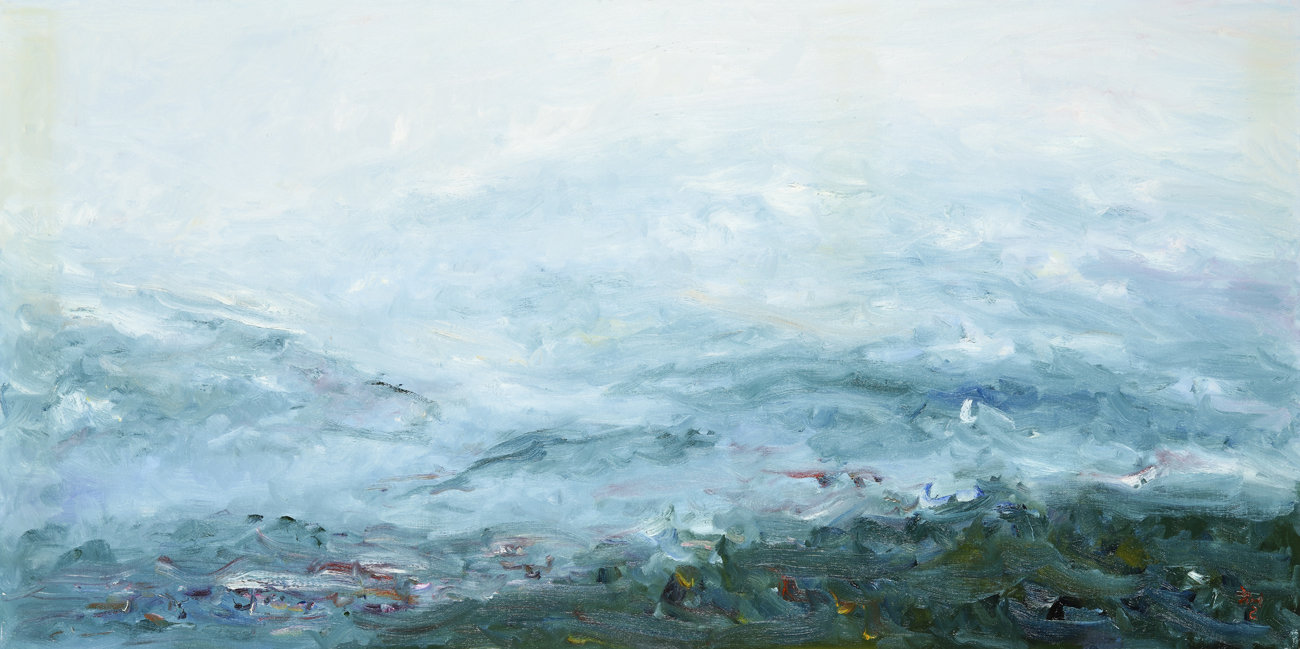
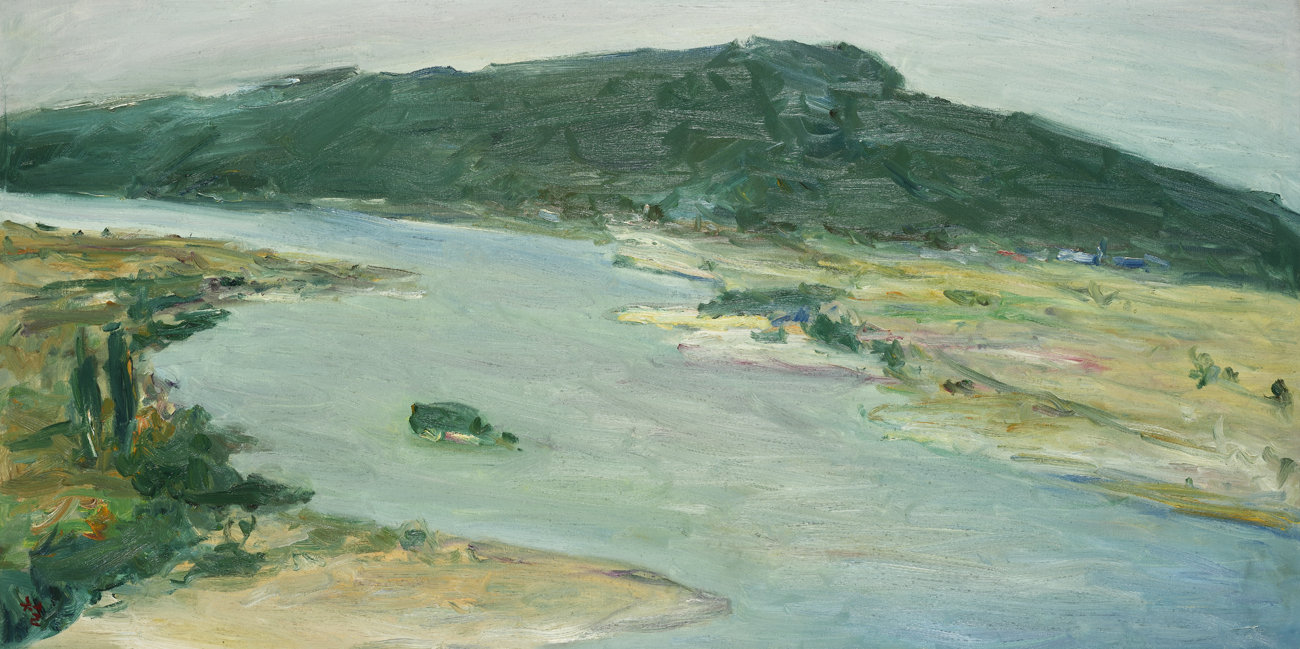
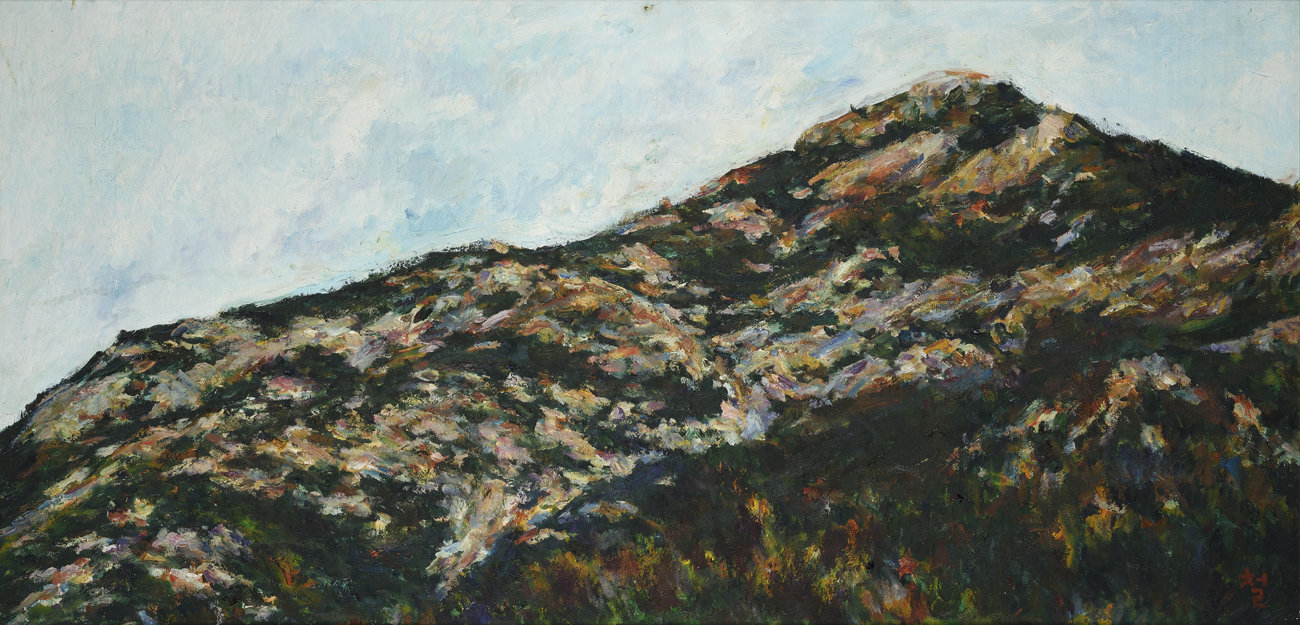
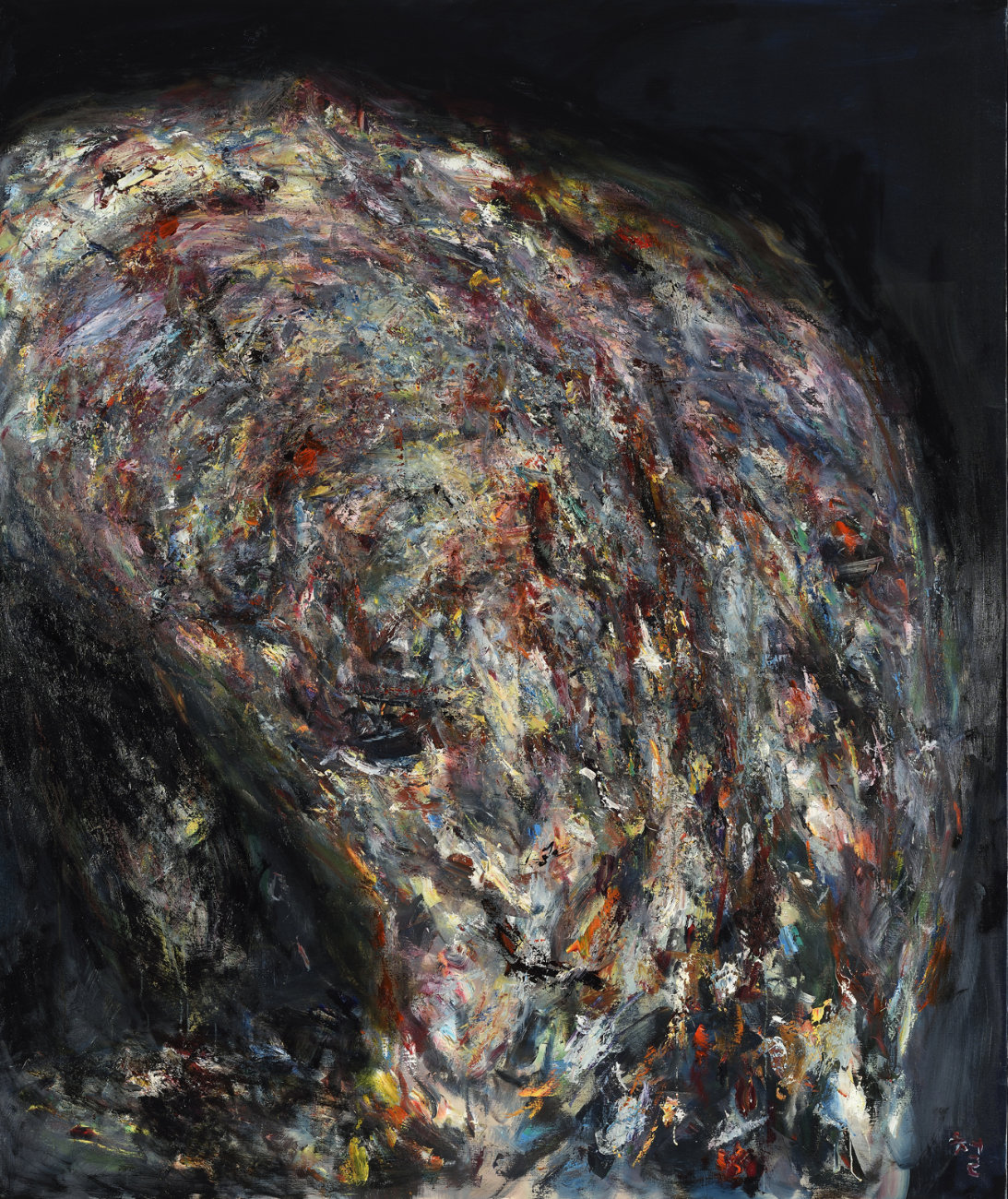
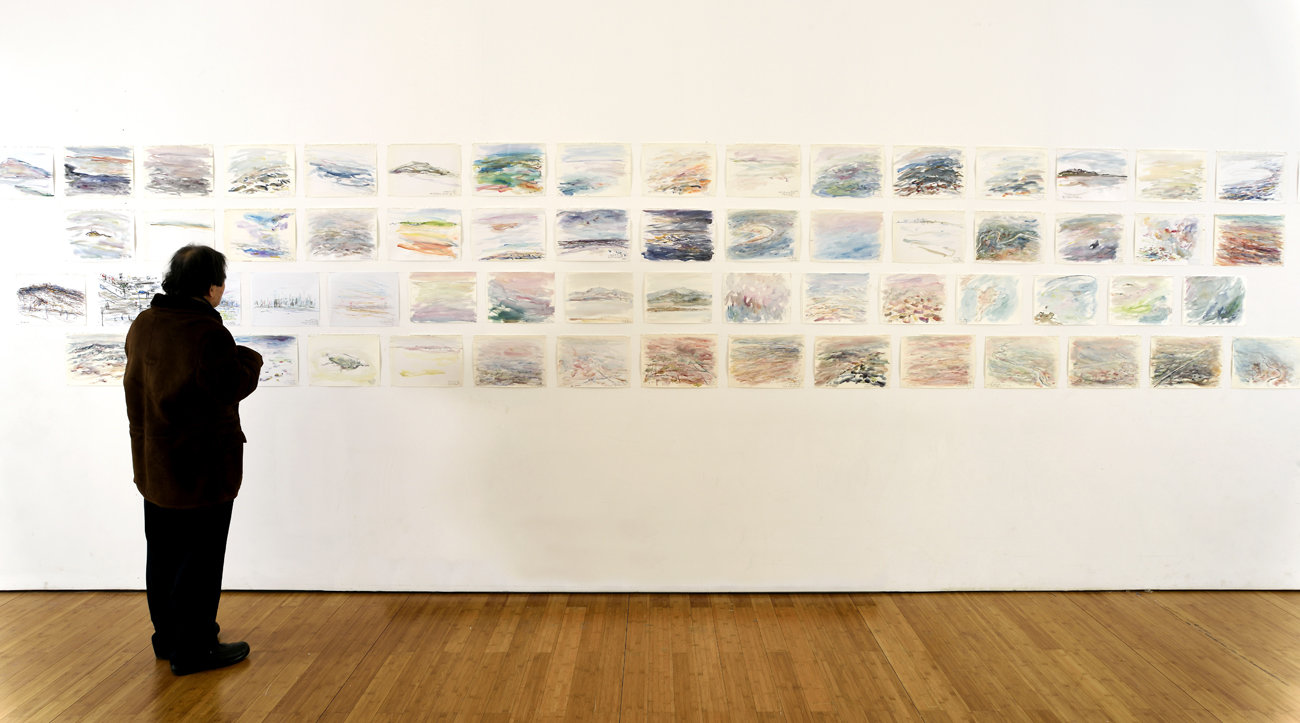
The primary motifs of his paintings are mostly Korea’s mountains and seas and the faces of Koreans. His paintings featuring such themes are not merely beautiful landscapes. He shows superb brushwork in depicting images of mountains and their change in his mountain paintings and the movements of the deep blue water and waves in his sea paintings.
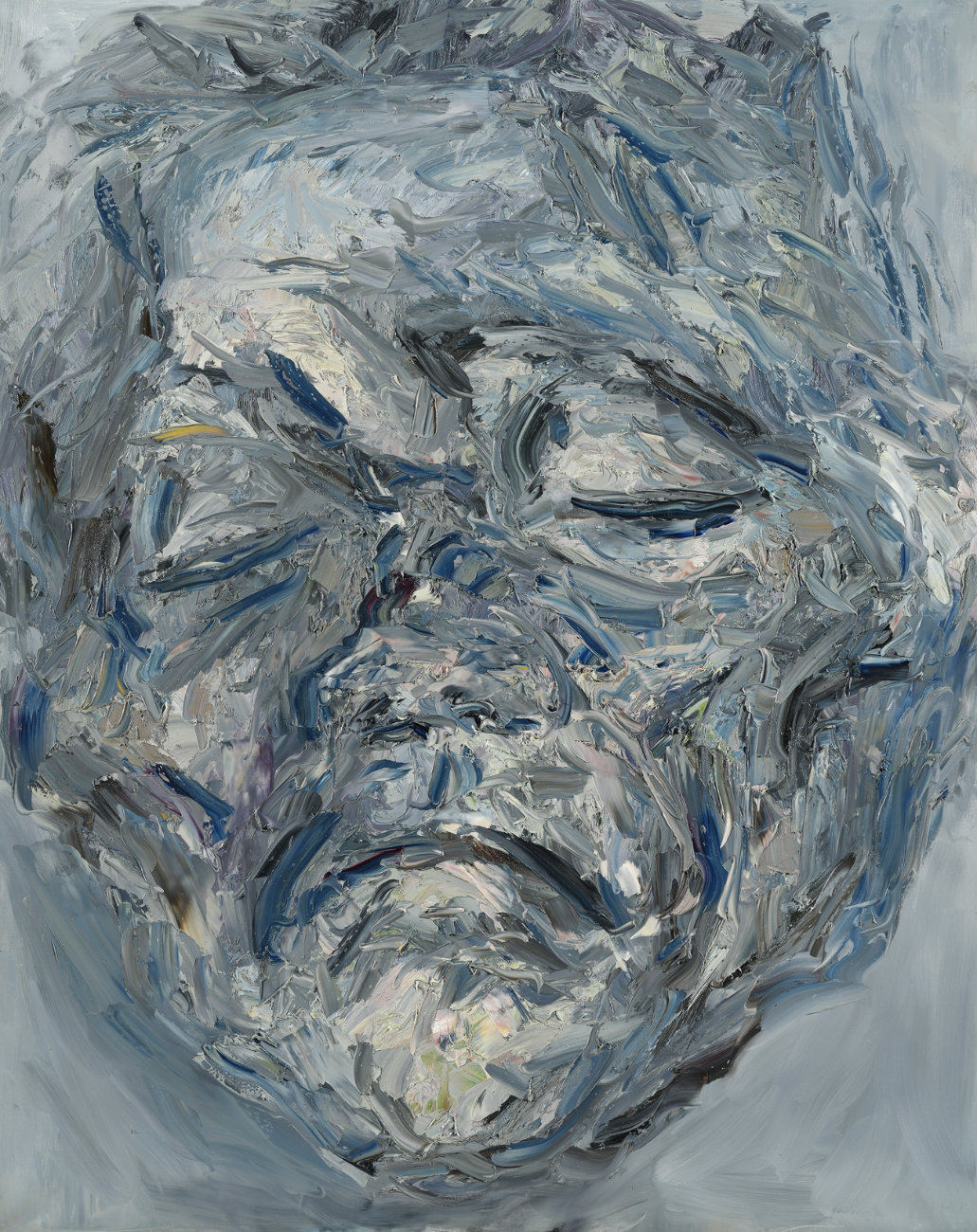
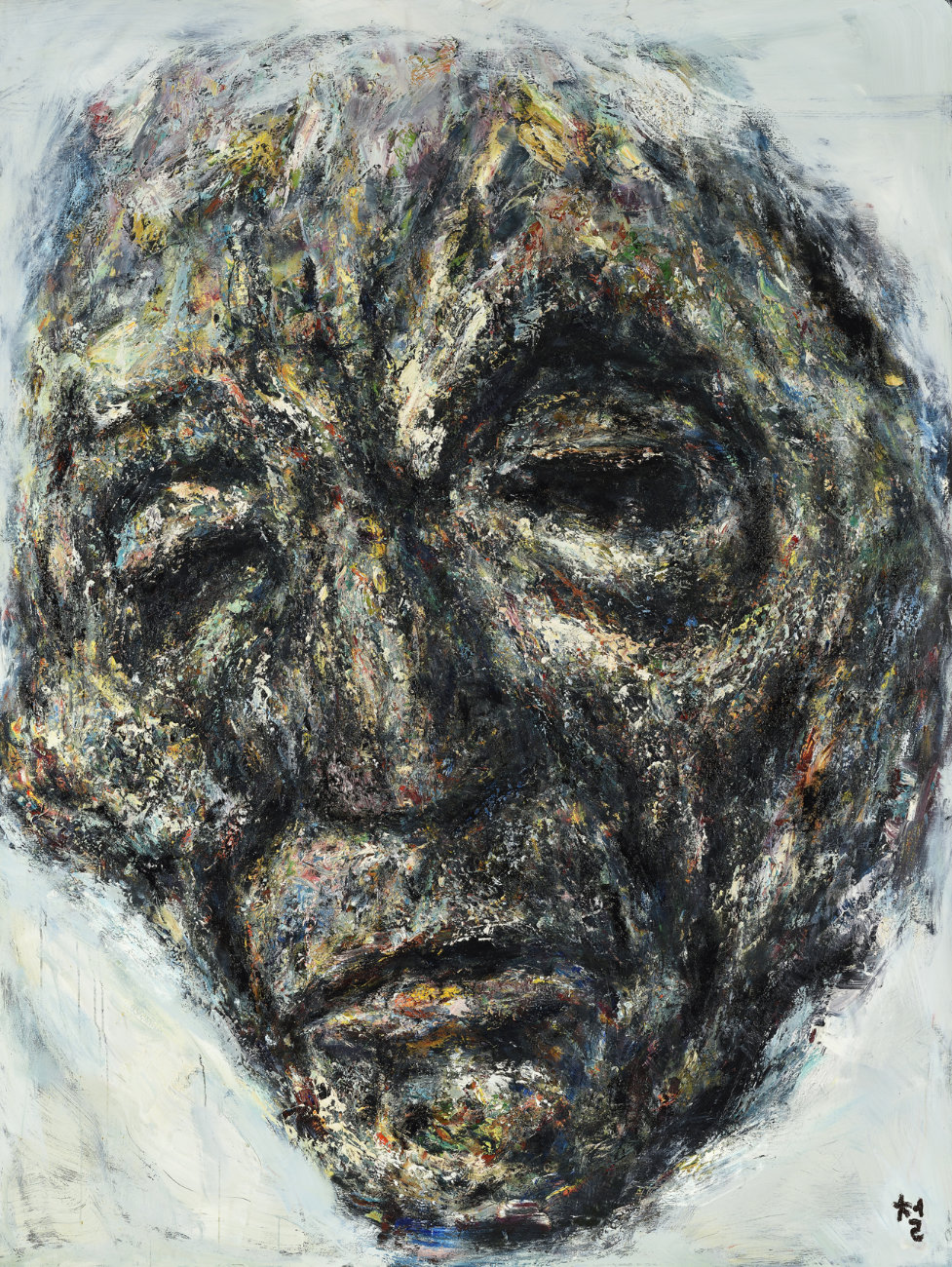
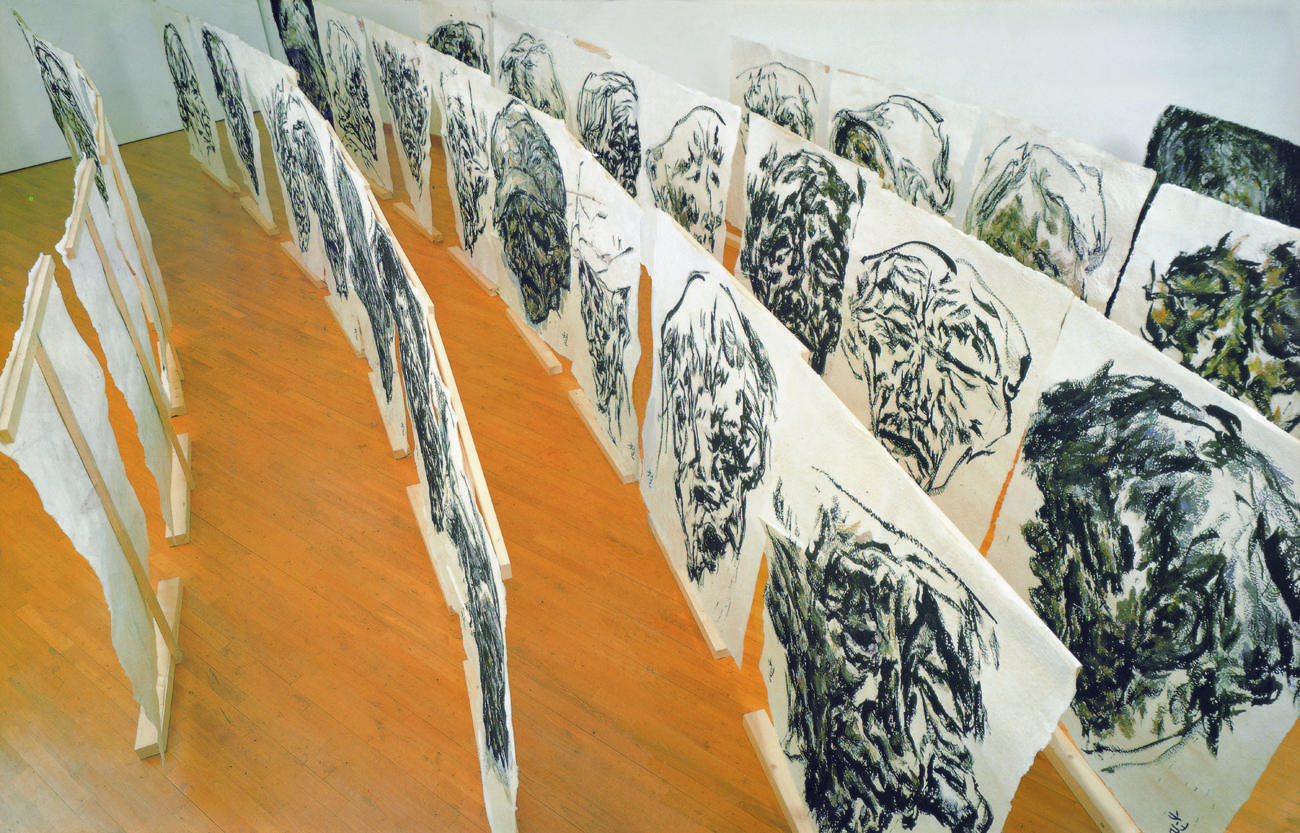
The faces he portrays are normally those of elderly men – old men from the country who have undergone all kinds of hardships and privations. Through their faces we can infer the images of those who were born and passed away in this land, traces of their lives, and their afterimages with no traces.
Kwun has produced a multitude of figure sketches in which he eloquently captured each individual’s distinctive characteristics. The figures he portrays, however, are particularly elderly Korean people who have gone through the hardships of life. These ordinary beings of our age remind us of those who have lived harsh lives and passed away from the stage of history. In a sense, it can be said that Kwun has restored aspects of ordinary people who are buried in history through living persons. The old country men and women’s twisted, stricken features and the plaintive images of those who died after spending their regrettable lifetime bring about pathos in us.
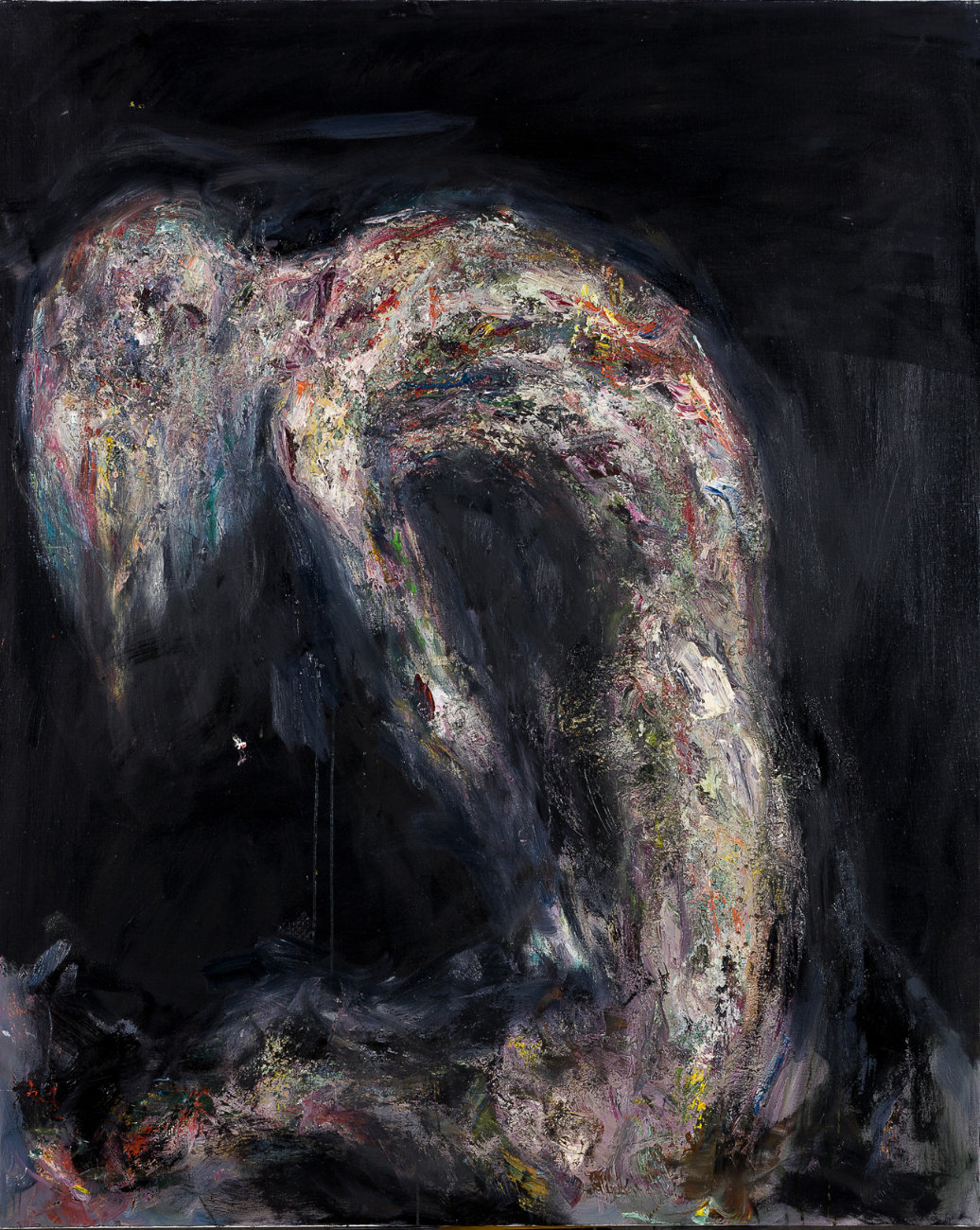
Meanwhile, Kwun’s frequently adopted theme is the “soul” which indicates that he seems to inquire into the problems of life and death as a painter. The reason why he takes the soul as one of his themes is probably due to the shock and sense of loss caused by his father’s death during the Korean War when he was young. This theme is not merely associated with his private history. He has often concentrated on events in contemporary Korean history such as the division of the Korean peninsula and the confrontation between North and South Korea. He represents the souls of those who were undeservedly victimized in diverse images. Such pictures of the souls appear intriguing and meaningful irrespective of his conception. The souls he has illustrated might remind some viewers of their own family members who have passed away. As the souls he depicts vary in types, they provide each viewer with a specific experience, allowing them to conjure up something special. He appeals to viewers by converting such individual experiences into universal emotions. His paintings featuring the confrontation between North and South Korea are simple yet potently appealing. His work seems to be something that traces erased, forgotten historical truths and elements of life. The conception of his paintings is quite idiosyncratic: he glues a piece of barbed-wire fence to his canvas; he paints a pair of shoes on another; he depicts an image hiding on one side of the canvas; and the souls he portrays can act as a metaphor for the division and confrontation of North and South Korea. His conception, composition, and prominent brushwork can be evidence of his profound thinking and his skill akin to that of a master artist. His philosophy and the painful history of Korea filter into his paintings. His style possibly derived from his deep insight into Korean history and its people and the bitter grief directed toward contemporary Korean history. Kwun’s art is of great significance when one considers the resentful division, the tragedy of fratricidal war and its wounds, as well as the reality that North and South Korea have confronted one another, meaning that the horror of war is always present. Few painters have addressed these themes in the Korean art scene, making Kwun a rare artist who has gained a reputation for his portrayal of them. It is not too much to say that he is a unique painter in this field, if not the sole artist, and a philosophical and historical master.
Much time has passed since Kwun started painting and since then the concepts and trends of art have also changed conspicuously. Influenced by this, domestic artists have created works based on different ideas and factures. And yet, Kwun has consistently followed a single path without faltering to such changes and trends, thereby establishing his reputation as an artist and joining the ranks of masters. The artist and his work is a showcase of how a master comes into being.
French critic Francoise Monnin who has followed Kwun’s works for a long time referred to him as a master without reservation in his essay for his 2010 exhibition. As his outstanding skill in composition and brushwork as well as his conception can be sensed in his works, those who have followed his art with interest may be able to predict where his idea and philosophy head. They can also agree with the French critic’s evaluation that he has reached the level of a master as his skill and technique appear to have fully matured.
Kim Yoon-Su
Former Director of National Museum of Modern and Contemporary Art, Korea