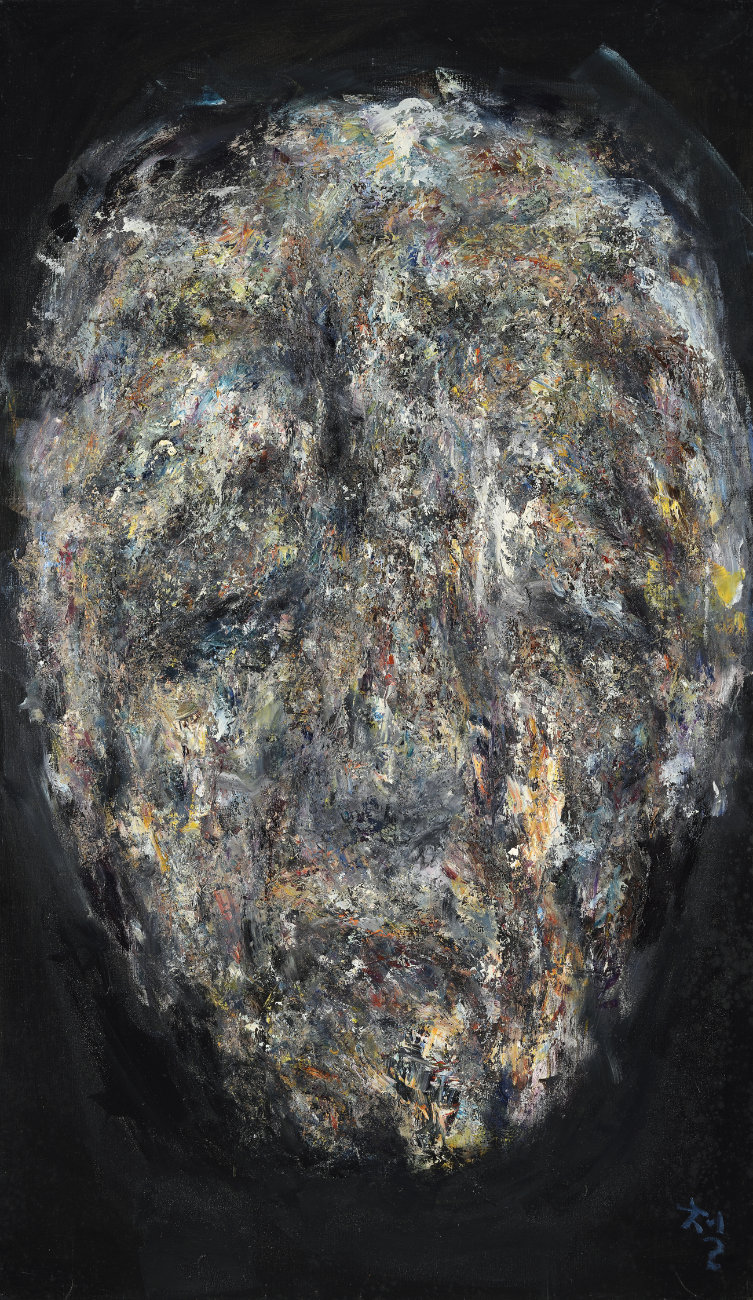
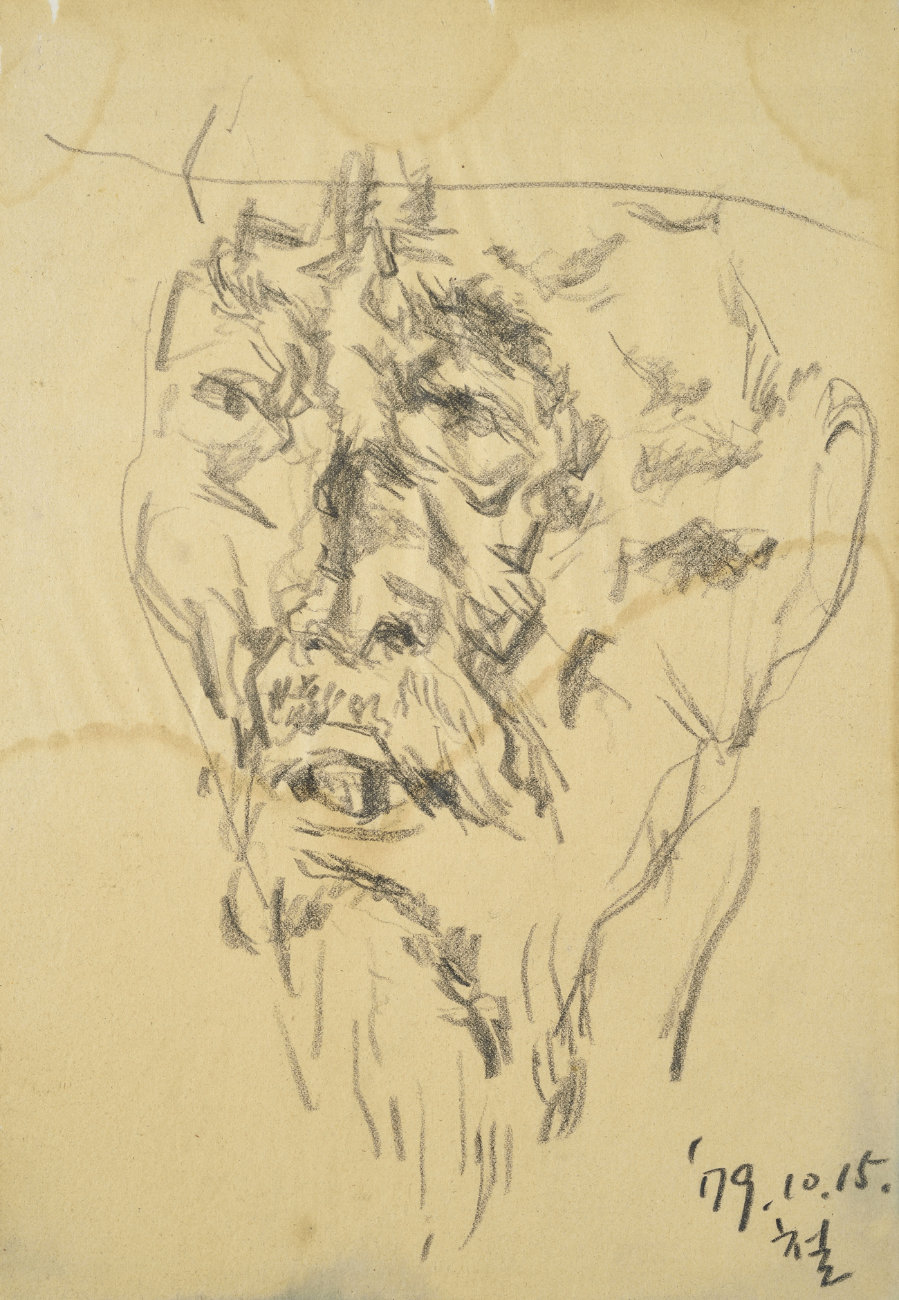
It’s not easy to endure the gaze of the figures Kwun Sun-Cheol has been painting over the last 40 years. Their eyes are fixed, serious, and potent – nothing has changed over time. They pose many questions to whoever falls under their gaze: Who are you? Where do we come from? Where are we going? These eyes as deep as a well lead us on a journey of our own self-introspection.
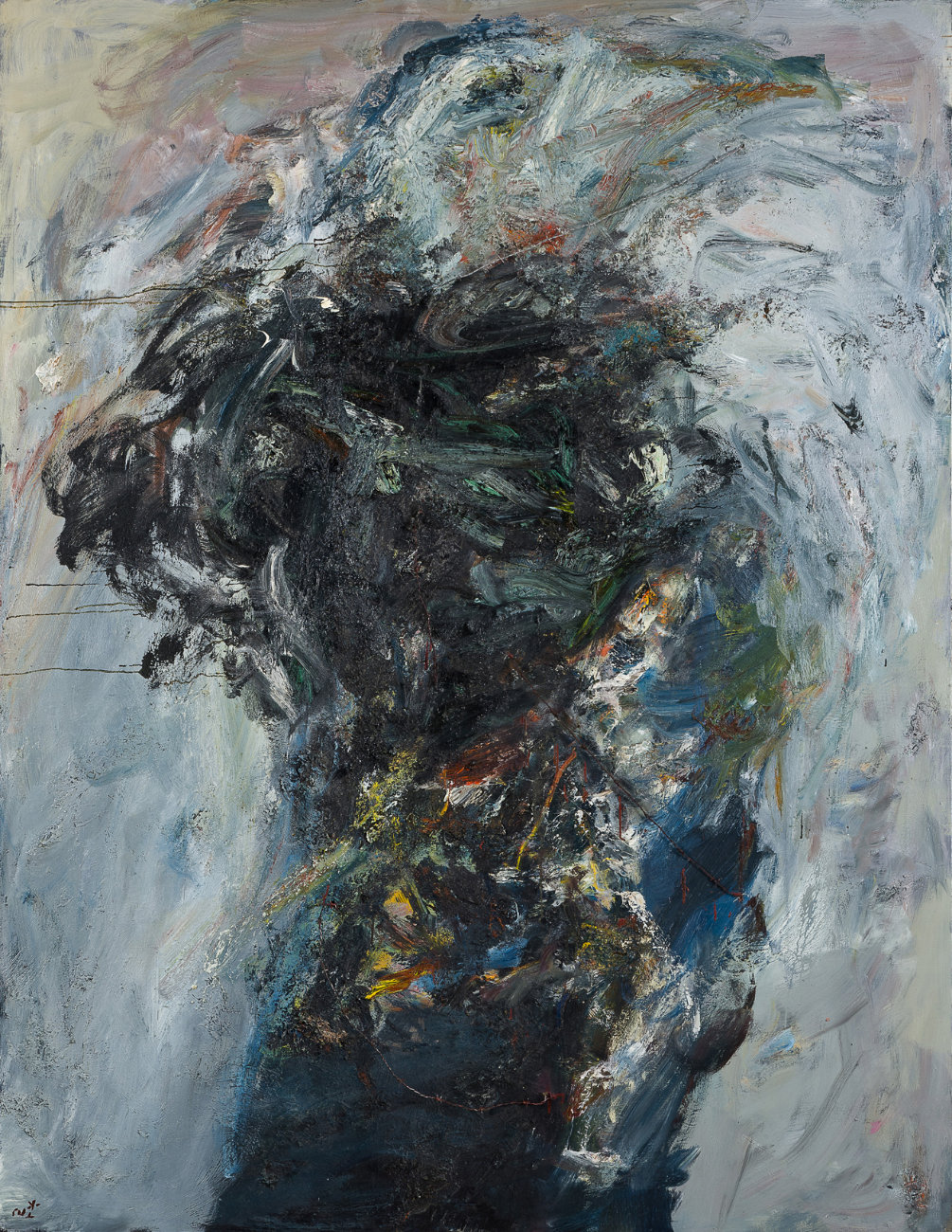
Black pupils and cheekbones set beneath thin eyelids remind one of the mountains, while a flat forehead harks back to fertile plains surrounded by a sylvan scene that is symbolized with black hair. The ears resemble craters and the neck looks like lava that has just cooled after flowing down from its source. Each head in portrait paintings is a face and a landscape, extolling a primal, absolute, and ruthless life as a metaphor for global wildness and abundance.
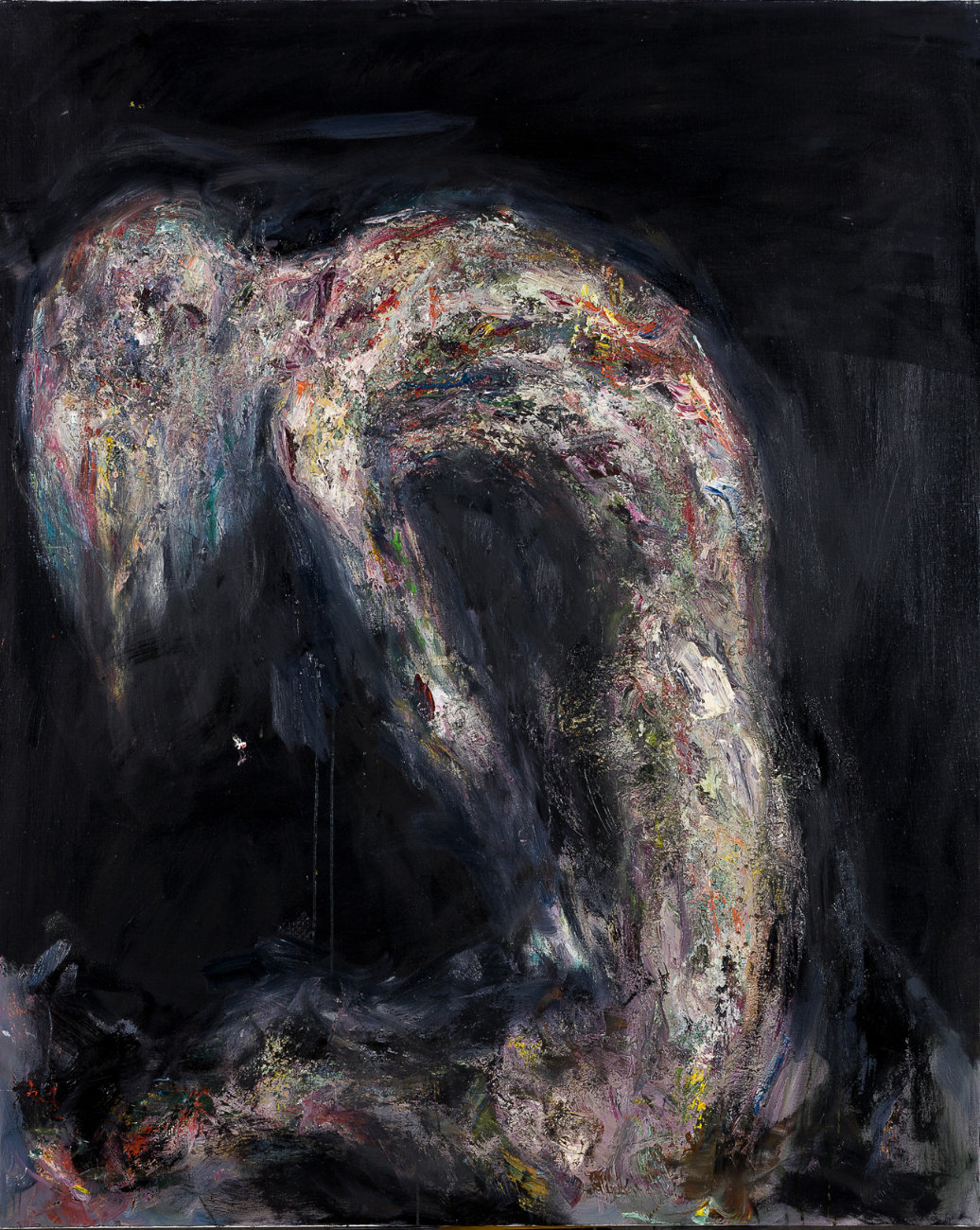
Multi-colored and thick matiere that has been laboriously rendered is evidence of the struggle Kwun has already undergone. Rocking angular brushstrokes speak of the struggle to come. Each face is depicted with lines and comes into shape with touches of the brush – be it a self-portrait or that of someone else – and is often buried but more frequently revealed, arousing a powerful impression. This face manages to completely represent the harshness that some entity has undergone. The painterly mode of Kwun, who is considered to be affiliated with expressionism, bears a similarity to that of Vincent Van Gogh (1853-1890), Jean Fautrier (1898-1964), and Eugene Leroy (1910-2000). As they once did, Kwun raises harshness and a mystique of existence to a dynamic, amazing, and flashy work.
World history is represented with maps and even tattoos on canvas and paper in Kwun’s works. His art can be thought of as a bridge that links prominently from European modern styles to extremely Eastern inherited traditions. Universal images that transcend time are created with a simultaneous operation of clandestine physical pain and collective spiritual regulations. His portraits, inspired by the horrors he underwent first-hand and with proper deliberation, invite us to travel the path of dignity as a symbol of courage and resistance, seeking wholeness without any detailed depiction.
The face portrayed is at times depicted separately from the body. For instance, one face resembles fingerprints on a blue sky. A colossal mask seems to float in the universe as if throwing off a shroud. The image created with potent touches of a brush that apply nearly fluorescent colors soon turns into a cloud that is transparent, amazing, thoroughly benevolent, and liberating.
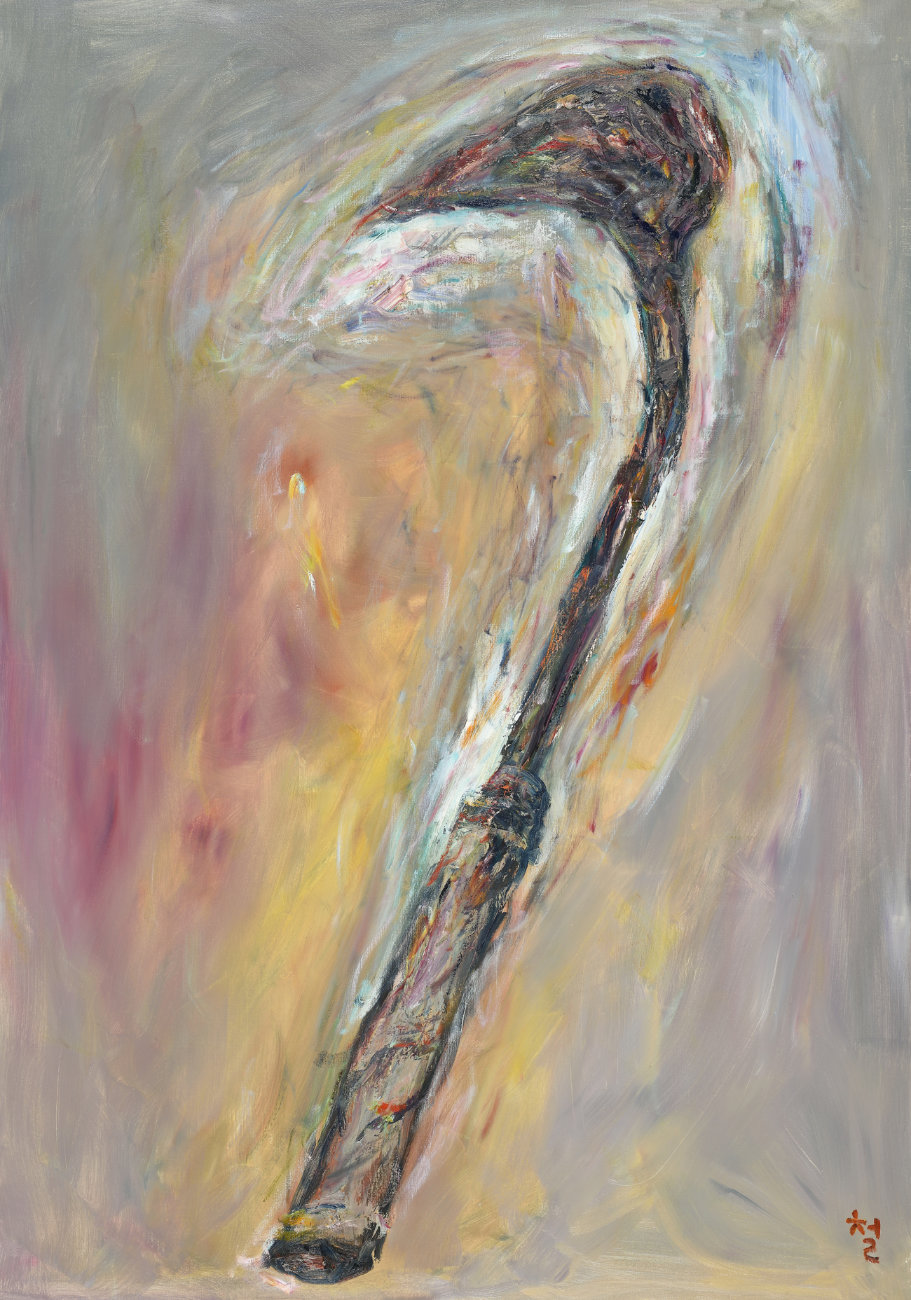
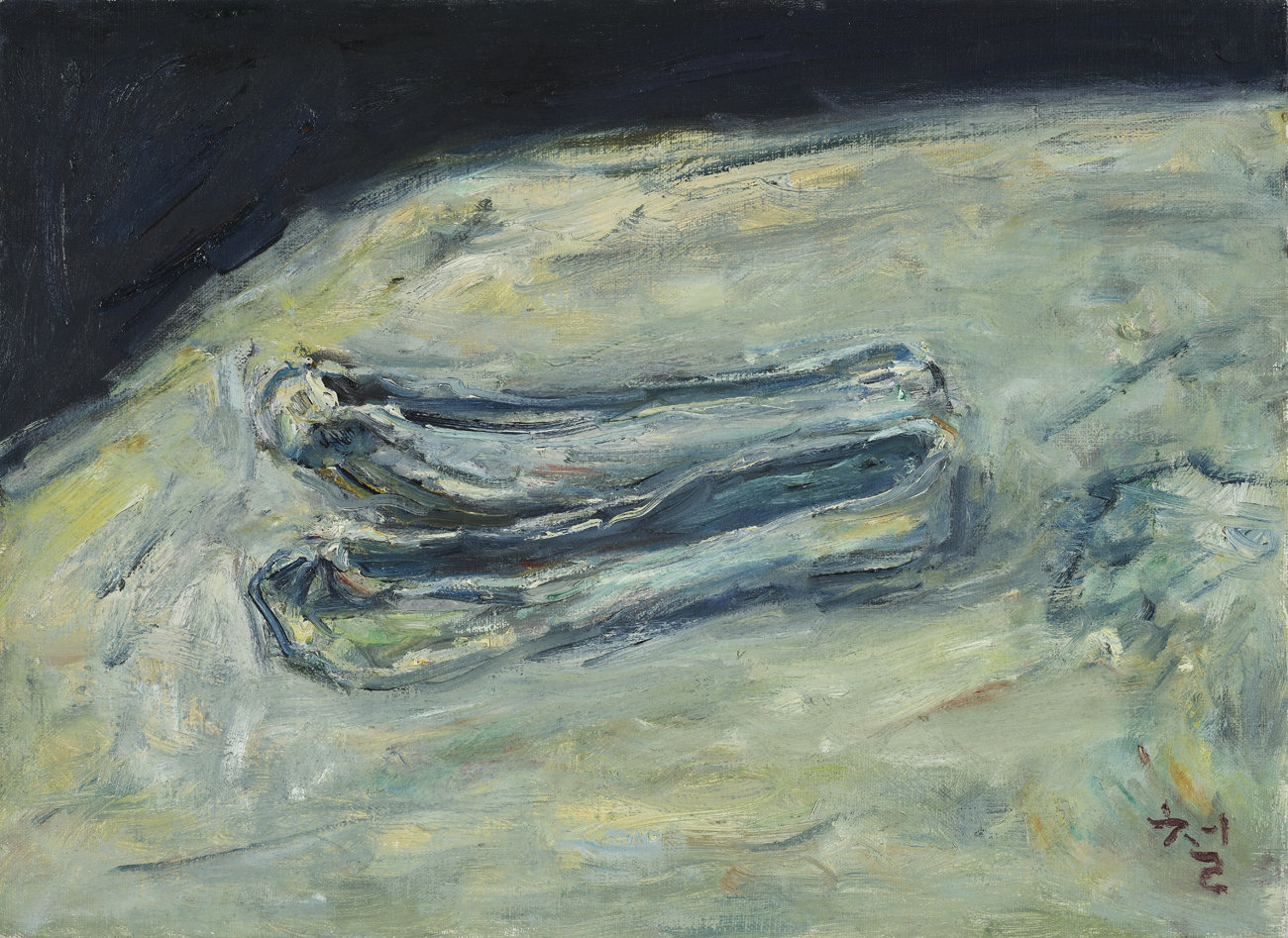
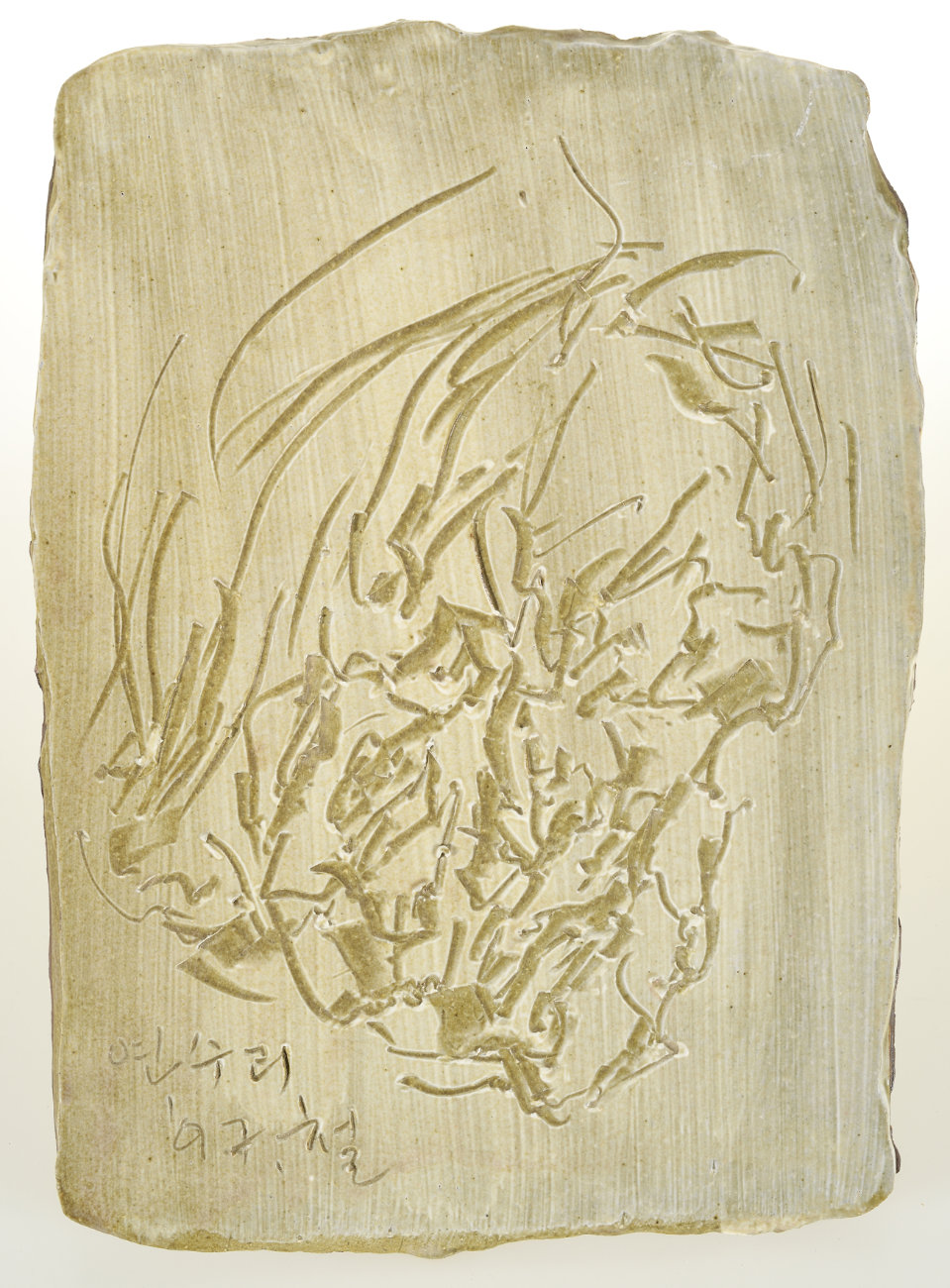
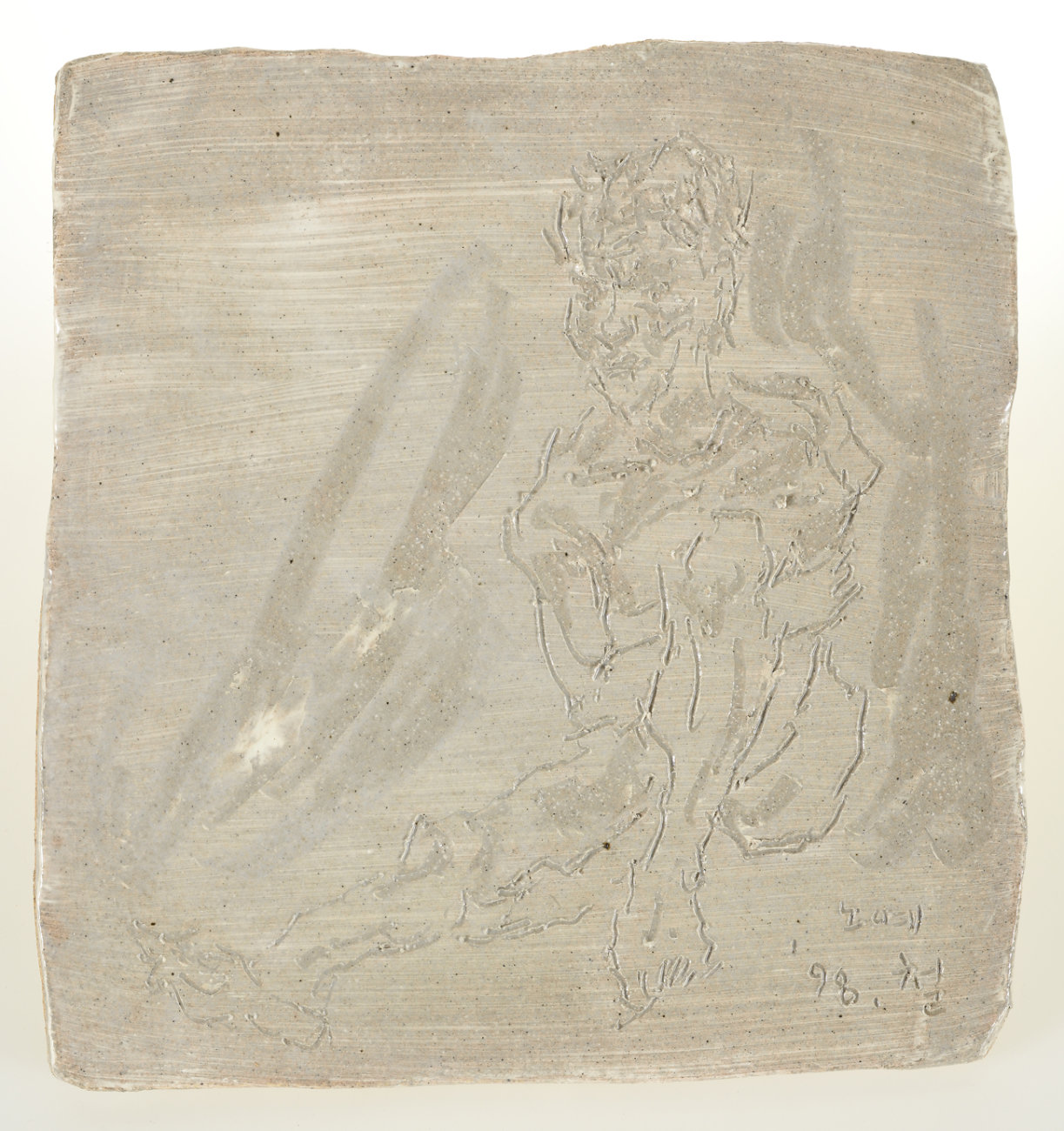
Each quotidian aspect that Kwun has often depicted and will introduce at his upcoming retrospective at the Daegu Art Museum is similar to this. A naked body is posing at his Paris studio, a tool a peasant left, a pair of female slippers, a deep flower vase, an empty bottle… Any material such as skin, silk, and ceramics can be represented in matiere and he expresses vibrations of matiere. His brushwork has become more accurate and his palette has infinitely increased.
The elemental themes of these paintings include that of life force and its change into energy as represented by his constant observations. His large-scale landscape paintings of mountains he painted in Seoul disclose this pursuit in a conspicuous manner. The mineral portions on either side of a rolling horizon with peaks gradually appear light, blurring the boundary of abstraction while the air moves and reveals its form. All things whisper and converse at the top and bottom of the scene in countless colors that have been applied using a tireless dancing of brushstrokes and an overlap of brush touches. This seems to make possible an encounter of the earth with the sky, density with nongravitation, the body with the soul, and the present with the past.
Kwun is in the same context with a few great modern landscape painters, in particular Paul Cezanne (1839-1906), Claude Monet (1840-1926), Mark Rothko (1923-2012), and Zao Wou-ki (1920-2013). As these artists once did, he dreams of a vivacious and harmonious world.
Water has an intimate conversation with an island in another large landscape painting. A tree has a private chat with a path in his latest work. This is a place where everything is mutually complementary and nothing is confrontational. Luminous glitter extends to the outline and deflects to the frontier. Peace seems to have been achieved at last in this territory where no humans are present and there is no empty space.
Francoise Monnin
Art historian
Editor in Chief of the magazine Artension